
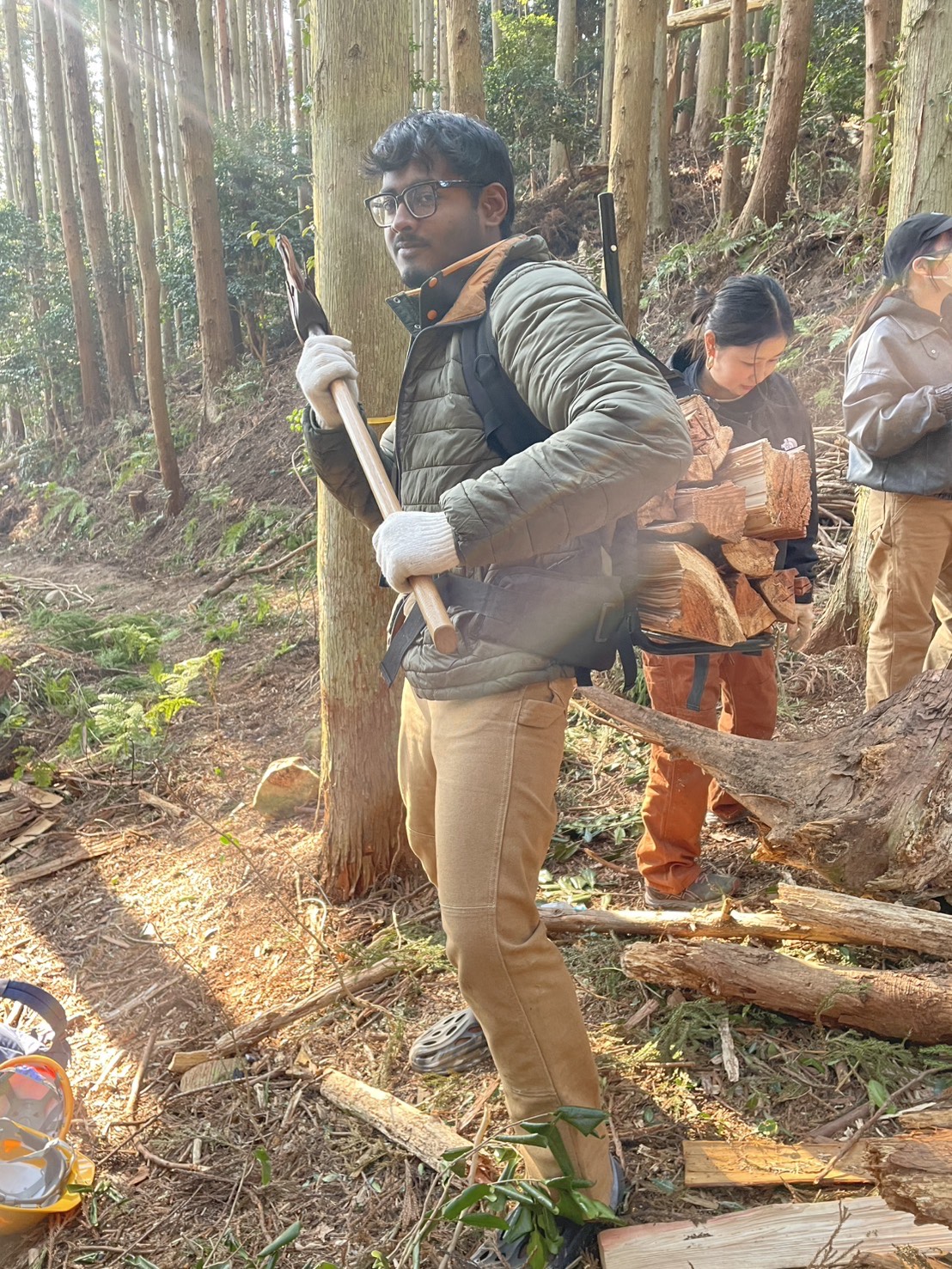
初めて女川で里山活動に参加したとき、正直あまり何を期待していいのかわかりませんでした。人と自然が調和して生きるという考えは知っていましたが、実際に体験してみるとより具体的に感じられました。
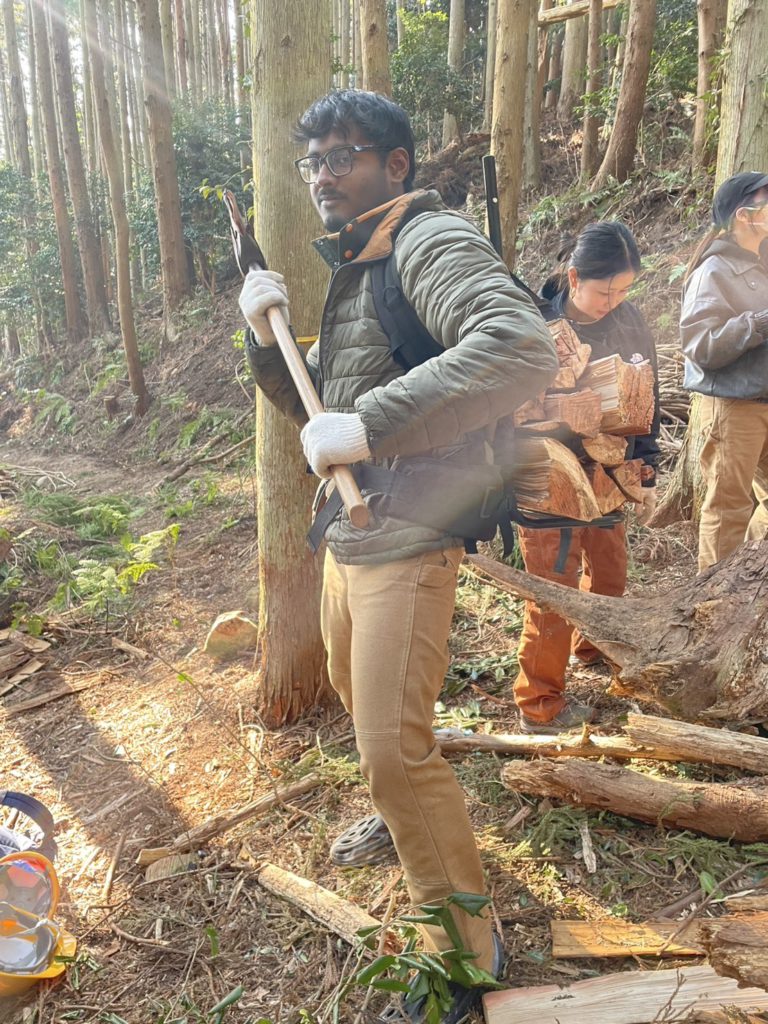
私たちは出島で作業を行い、海へと続く急な斜面を下りながら、森林の一部を整備しました。ジュウリサウナで使うために大きな杉を伐採しました。一見単純な作業に思えましたが、実際には集中力が必要で、一つ一つの作業が光を取り入れ、生態系を支えることにつながっていました。
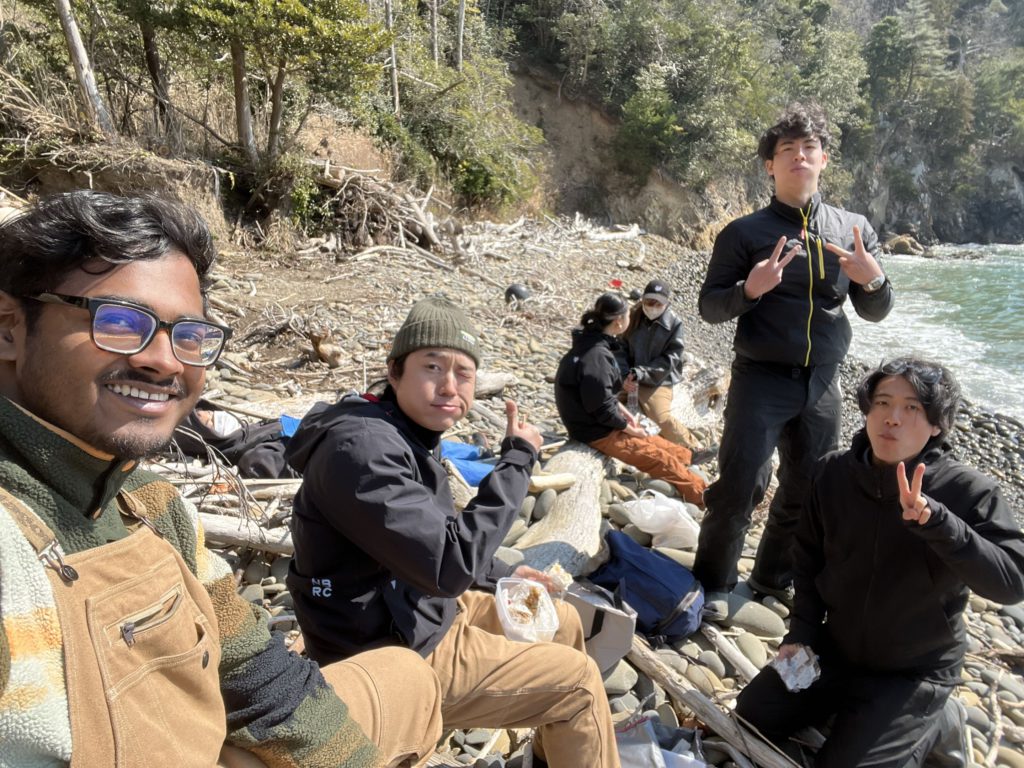
昼休みには、小さな岩場の海岸まで降りていき、みんなで一緒に昼食をとりました。私は断食中だったので食べませんでしたが、それでも静かで印象に残る時間でした。
印象的だったのは、その作業の意図でした。自然をただ取り除くのではなく、適切に管理すること。これにより、保全とは受け身ではなく、積極的に関わるものだと考え方が変わりました。
また、学生や地元の人たちと一緒に作業したことで、共通の目的を持つ一体感も感じました。
海洋生物学を学ぶ学生として、この経験が非常に関連していると感じました。陸と海の生態系はつながっています。
一日の終わりには疲れていましたが、満足感がありました。小さな作業でも意味のあるものだと感じました。
A Day in Satoyama: Onagawa Experience
I didn’t know what to expect when I joined a Satoyama activity in Onagawa for the first time. I understood the idea of living in balance with nature, but experiencing it made it more concrete.
We worked on Izushima, down steep slopes toward the coast, clearing part of the forest by harvesting large cedars for use at Juuri Sauna. What seemed like simple labor required focus—each cut helped open space for light and supported the ecosystem.
During the lunch break, we made our way down to a small rocky beach, where everyone sat together and ate. I was fasting, so I didn’t eat, but it was still a quiet and memorable moment.
What stood out was the intention behind it. This wasn’t about removing nature, but managing it carefully. It changed how I see conservation, as something active rather than passive.
Working with students and locals also created a sense of shared purpose.
As a marine biology student, I was struck by how connected it felt. Land and ocean systems are linked.
By the end, I was tired but satisfied. The work felt small, but meaningful.
投稿者プロフィール
最新の投稿
 おためし移住ブログ2026.03.30船上でのサンプリング
 おためし移住ブログ2026.03.30女川の夜空
 おためし移住ブログ2026.03.30温かいチームの雰囲気
 おためし移住ブログ2026.03.30出島でのバーベキュー